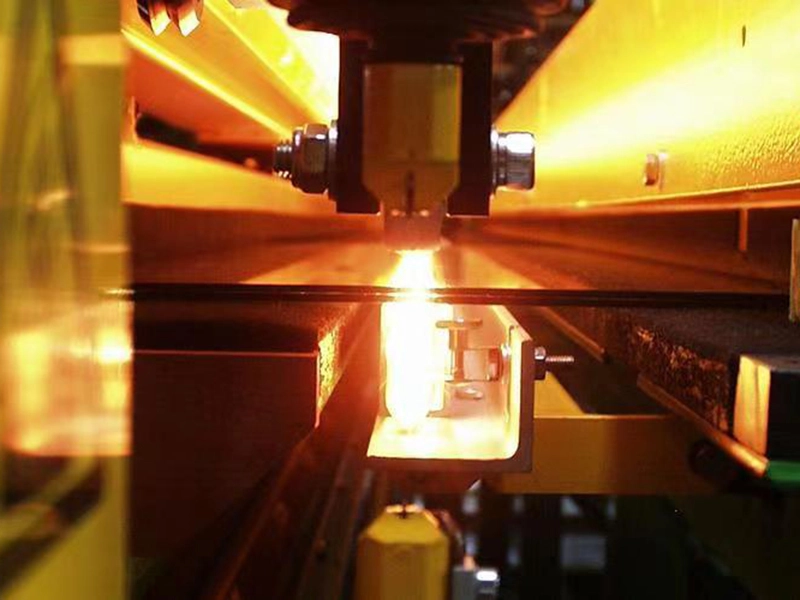
On the tempering line, the preheat station is where you either keep the rate or you lose it. If the rod heaters are slow to respond, the furnace sits idle and the whole loop drags. If the glass isn’t even across the width, you’re buying thermal stress and optical distortion—scrap that shows up after the fact. The Punti rod preheater lamp is built to take that guesswork out. What matters, technically It uses short-wave infrared quartz elements, so you’re hitting the glass surface with direct radiation instead of heating a bunch of air. In practice, that translates to a ramp rate up to 12°C/s—you get to setpoint fast without overshoot. Temperature uniformity across the heating zone is held within ±3%, which matters when you’re running low-E and other coated glasses that don’t forgive hot spots. Power density is calibrated at 30–45 W/cm², enough heat flux to bring the surface up without creating sharp edge-to-center gradients. And when you switch batches, setpoint changes execute in seconds, with a thermal profile that repeats, run after run. Why it fits the line This lamp was designed for real glass processing—tempering, bending, and coating preheat stages where timing is measured in seconds. Fast, repeatable heat means you can push line speed without paying for it in scrap. The uniform thermal field cuts down edge stress and lowers breakage risk during quench. Energy use drops because you’re heating the glass directly, not the surrounding air, and the short cycles keep the process tight. The rod form factor also drops into tight preheat modules, so you can replace aging heaters without reworking the whole line. A few shop-floor details Installation is straightforward, but clearance to the glass and nearby components matters. Keep the minimum standoff to avoid localized overheating and to protect seals and insulation. The lamp performs best when the target surface emissivity is stable; highly reflective coatings can reduce absorbed energy, so you’ll need a modest power adjustment. Schedule routine quartz inspections, and make sure your power supply and connector rating match the lamp’s voltage and current draw.