
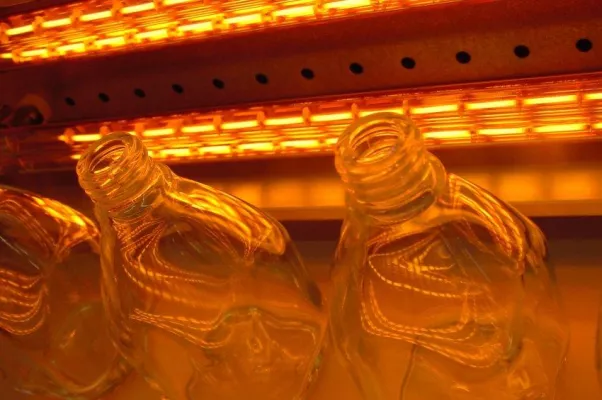
Getting the Heat Right: Why Twin Tube IR Lamps Matter for Glass R&D
If you’ve ever tried using a standard, off-the-shelf infrared lamp for glass research, you know the frustration. They’re designed to heat everything evenly. But in a lab, uniform heat is usually the last thing you actually want. You’re usually hunting for those specific thermal gradients—the exact spots where a material shifts phases or starts to stress. That’s why we don’t just sell lamps; we build tools. Our twin tube IR lamps aren’t just about changing the size of the tube. It’s about controlling exactly where the power goes. Tuning the Heat Most shops will just offer you a longer or shorter tube and call it a day. We do things differently. We play with the wattage per centimeter across the axis. By tweaking the filament winding and the voltage, we can bake “hot zones” and “cool zones” right into a single lamp. It’s a huge time-saver. Instead of fighting with a mountain of complex multi-zone controllers, the lamp does the heavy lifting for you. Want a concentrated peak in the center to trigger a localized melt while the edges stay stable? We can do that. The Nitty-Gritty Hardware We use high-purity quartz. Why? Because it lets the shortwave transmission through without any fuss. The twin-tube setup is basically a cheat code for power. You get double the radiant output in a tiny footprint—more watts, less space. We wire these with industrial-grade connectors because high current doesn’t play nice with cheap parts. One heads-up, though: when you cram that much power into a small area, things get hot. Fast. If your ventilation is weak, you’re asking for a burnt-out filament. Make sure your cooling fans are actually moving the air away from the lamp ends, or you’ll be replacing bulbs a lot more often than you’d like. Real-World Research In glass R&D, freedom is everything. You need to know if a new compound behaves differently under a 50W/cm ramp compared to a flat 30W/cm profile. We don’t treat these lamps like commodities you buy in bulk. We treat them like precision instruments. You send us your thermal map, and we build the filament to match it. No guessing. No “close enough.” Just the exact heat you need, right where you need it.