Why 0.1°C Actually Matters in Glass Annealing
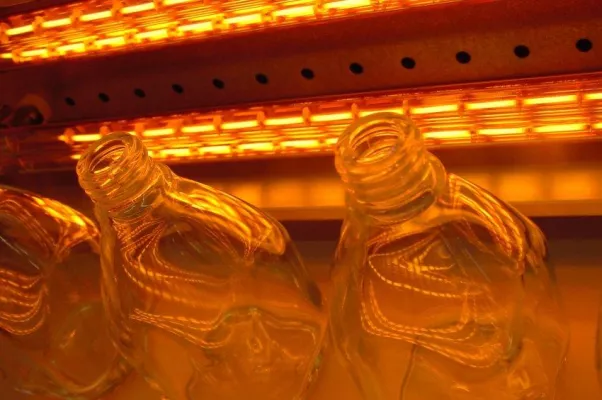
When you’re working with lab-grade glassware, internal stress is basically your worst enemy. If the glass cools down too fast or unevenly, you end up with these tiny, invisible fractures. They’re like little time bombs. One accidental bump or a quick temperature jump during a reaction, and the whole thing just shatters. To stop that from happening, we use infrared (IR) heating elements that can hold a tolerance of 0.1°C. **Here’s the thing about annealing.**You have to hit that glass transition temperature and just… stay there. If your heater swings by even a couple of degrees, you might actually create new stress while trying to get rid of the old stuff. That’s why we go with high-precision IR emitters. They react instantly. Old-school resistive coils have a lag, but IR lets us tweak the heat in real-time. It keeps us from getting those “hot spots” that warp a volumetric flask or mess up a precision-bore tube. We use short-wave IR because it actually sinks deep into the glass wall. We aren’t just heating the surface; we need the core of the glass to feel the heat too. To make that work, we pair the emitters with PID controllers and thermocouples that react fast. But there is a catch. These IR elements pack a ton of heat into a tiny space. If you don’t get your cooling fans and shielding just right, you’ll end up frying your sensors and control wires. It’s a balancing act. When you can keep that window within 0.1°C, the glass molecules have the room they need to rearrange without any tension. You end up with a piece of labware that’s actually stable and durable. It all comes down to the ramp-down. Slow, steady cooling—driven by that precise IR modulation—is the only way to be sure your glass won’t just pop when the pressure is on in the lab.